News
Here are some updates.
2026
- 2 Dec 2026 Upcoming talk Seminar at TRIUMF, "Particle Transport for Neutrino Detectors"
- 28 Oct 2026 Upcoming talk Seminar at York University, "Three unique analyses for three new neutrino detectors"
-
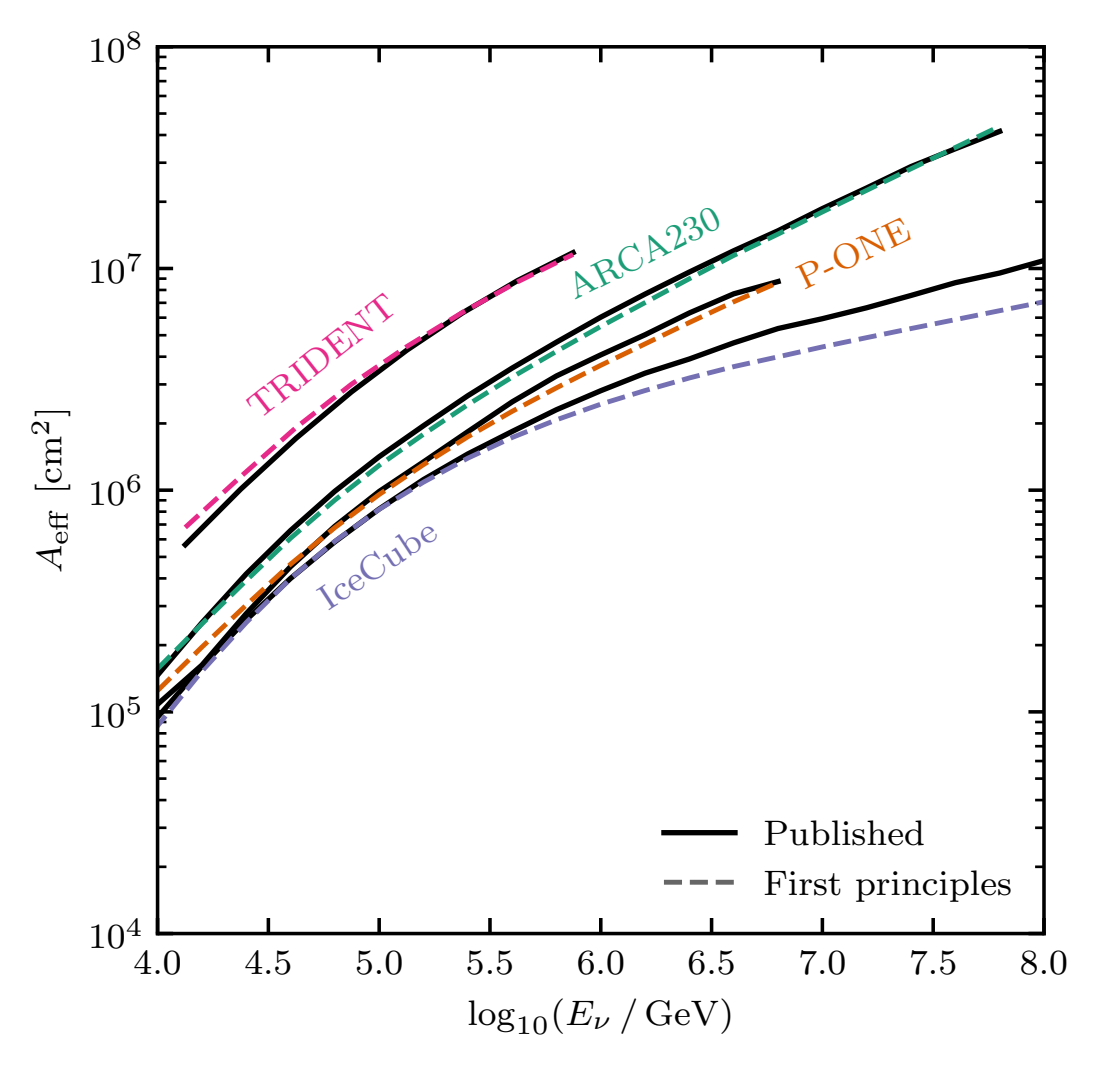
Where do neutrino telescope effective areas come from?
Neutrino telescopes see neutrinos through muons born kilometers outside the detector, and how far those muons travel sets how many neutrinos a telescope can catch. I compute that range analytically, including the random way muons lose energy. With two numbers per detector, the result matches the published effective areas of IceCube, KM3NeT/ARCA and P-ONE to about 1%. The calculation is available as the open Python package softpaws 1.0.
- 21 Sep 2026 Talk Seminar at the University of Iowa, "Probing Dark Matter Interactions Near Supermassive Black Holes"
- 10 Sep 2026 Talk Seminar at Queen's University, "Probing Dark Matter Interactions Near Supermassive Black Holes"
-
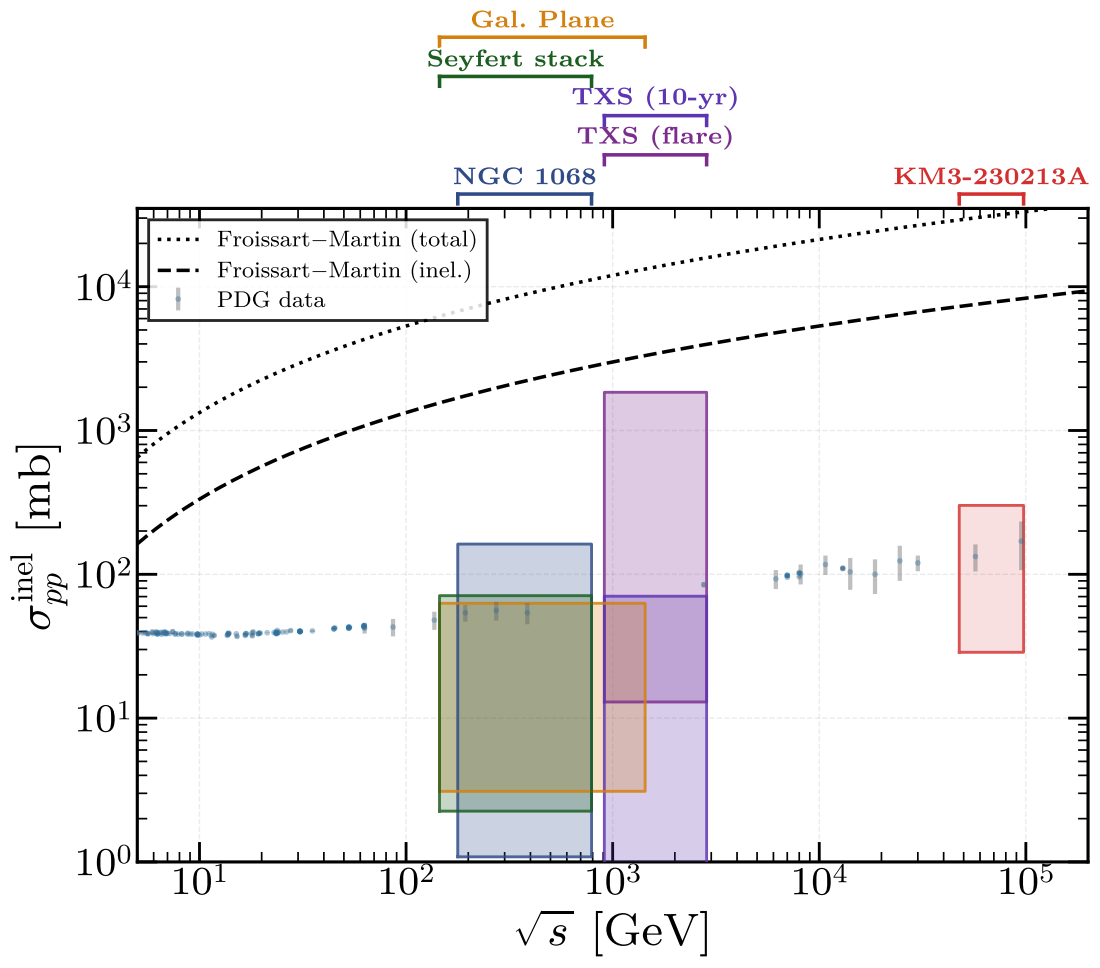
Cosmic neutrino sources as particle colliders
Cosmic accelerators reach collision energies far beyond any machine on Earth, and the neutrinos they emit carry information about those collisions. With Carlos Argüelles and colleagues, we fix every astrophysical ingredient of a source from light observations, so that the proton collision cross section is the only unknown left. Applied to IceCube's neutrino sources and the record-energy KM3NeT event, this bounds collisions at energies up to about $10^5$ GeV, some well beyond the LHC. My part was computing how $pp$ and $p\gamma$ collisions produce neutrinos.
-
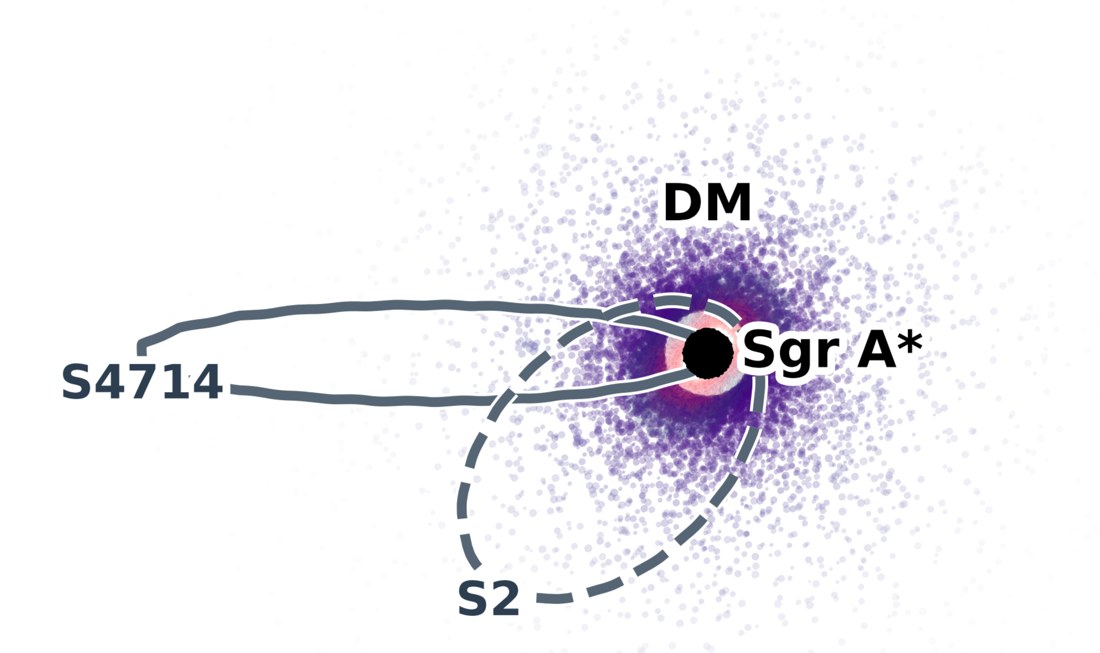
Stars near the Milky Way's black hole as dark matter detectors
A few stars orbit the black hole at the center of our Galaxy on very tight paths, and if dark matter piles up there, they plunge through it on every orbit. With colleagues, we compute how much energy dark matter would exchange with such a star, using S4714 as an example. For a dense dark matter spike, this energy can match the star's own luminosity for interaction strengths that popular production scenarios predict. That makes the Galactic Center a natural laboratory for dark matter, complementary to detectors on Earth.
-
The glowing life of the deep Pacific
Many deep-sea organisms make their own light, and for an ocean neutrino telescope that light is background. In a study led by Ruohan Li (PhD), we analyze four years of camera and light-sensor data from the STRAW instruments, pathfinders for P-ONE, at 2 to 2.6 km depth off British Columbia. The flashes follow the tides, so they are mostly triggered when currents push organisms against the instruments. The data teach marine biologists about life in the deep Pacific and neutrino physicists how to model their background.
-
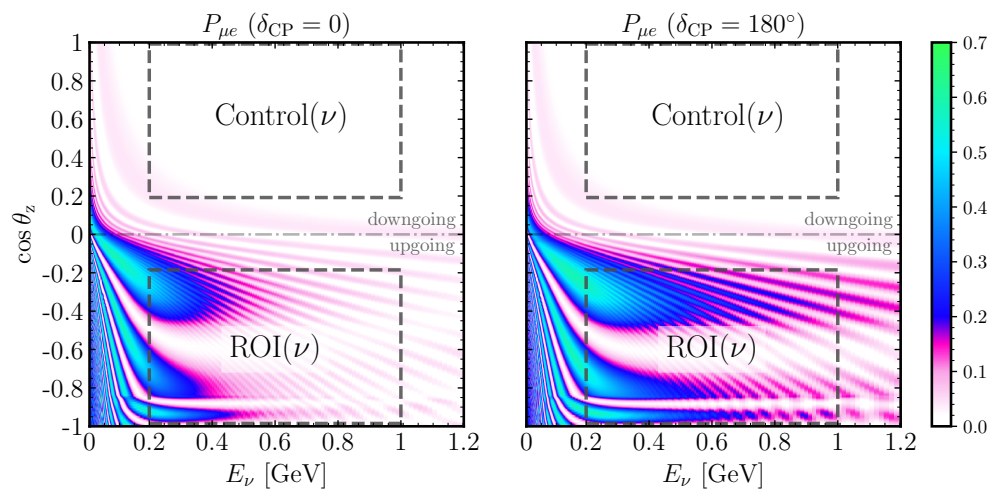
Can atmospheric neutrinos measure CP violation?
Measuring CP violation, a difference between neutrinos and antineutrinos, is a main goal of next-generation neutrino experiments, usually with accelerator beams. With Ho Man Yim (PhD candidate) and with John Beacom, Nicole Bell and Matthew Dolan, we show that low-energy atmospheric neutrinos can do the same job by comparing those arriving from above and from below. For Hyper-Kamiokande, this can surpass the sensitivity of the accelerator experiment T2HK where CP violation is largest. Getting there needs additional, but realistic, work on theoretical uncertainties.
2025
-
Can the highest-energy cosmic rays tell us how dark matter interacts?
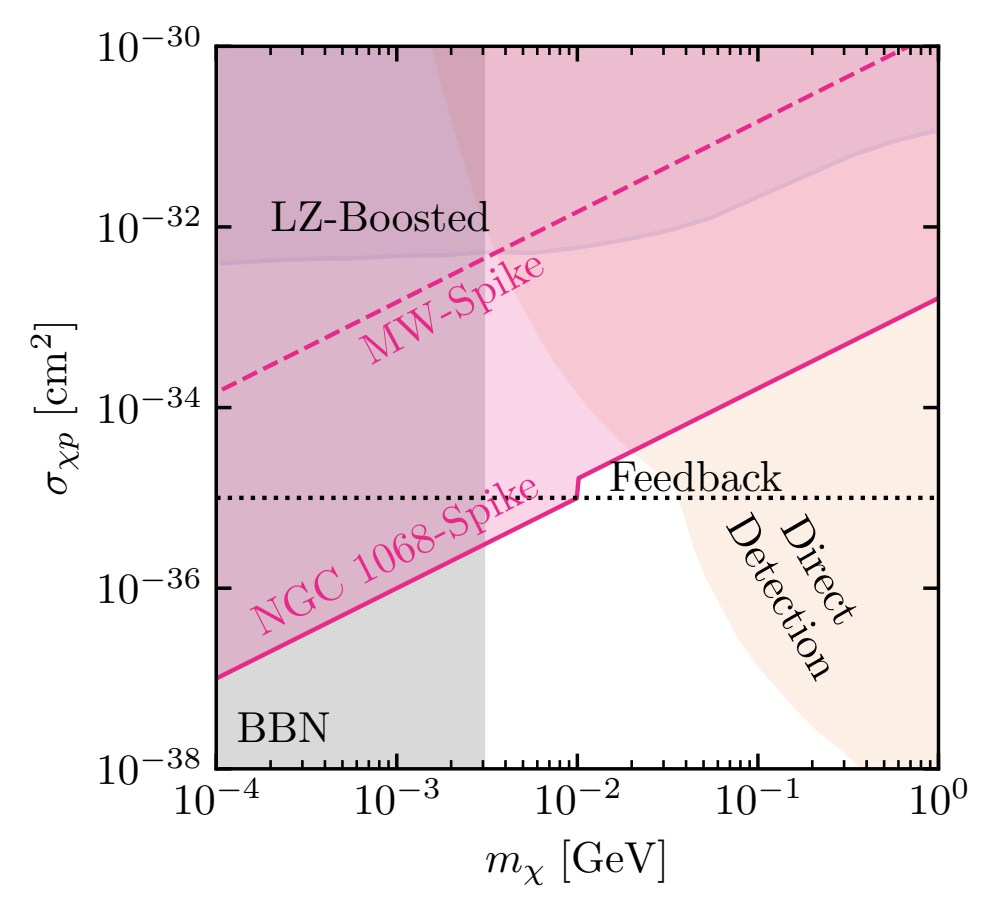
The highest-energy cosmic rays may be accelerated near supermassive black holes, where dark matter can also pile up into dense spikes. With Bhupal Dev and Matheus Hostert, we point out that if dark matter scattered too easily off nuclei, it would break them apart before they reach the energies we observe. If these cosmic rays come from sources like NGC 1068, this rules out new territory for dark matter between 3 and 30 MeV. How cosmic rays are accelerated is still uncertain, so these are not yet robust limits, but they connect two open questions in a new way.
-
An open benchmark for machine learning in neutrino telescopes
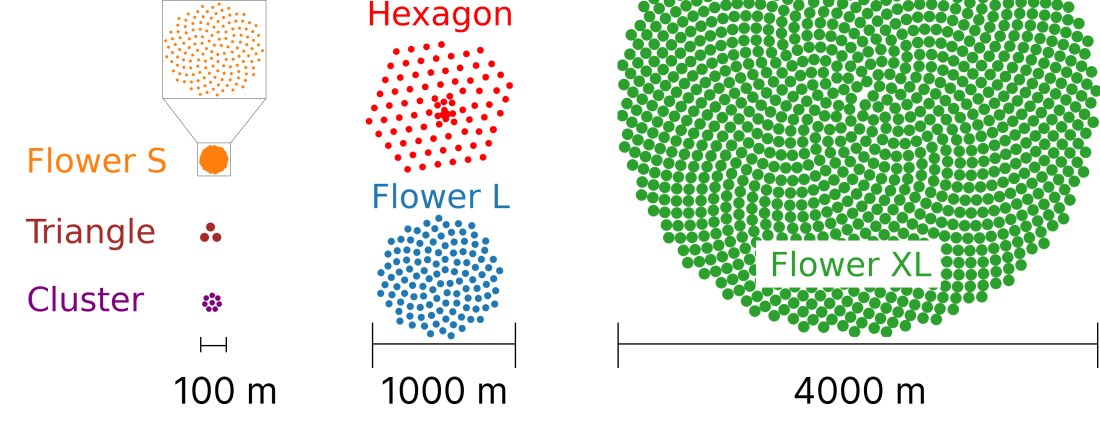
Machine learning now reconstructs neutrino events well inside individual telescopes, but comparing methods across experiments has been nearly impossible without public data. With colleagues, we built NuBench, an open benchmark of almost 130 million simulated neutrino interactions in six detector layouts, generated with Prometheus. We test four reconstruction algorithms, including those used in KM3NeT and IceCube. My part was the simulation code and the public data sets.
-
Nearby white dwarfs as dark matter traps
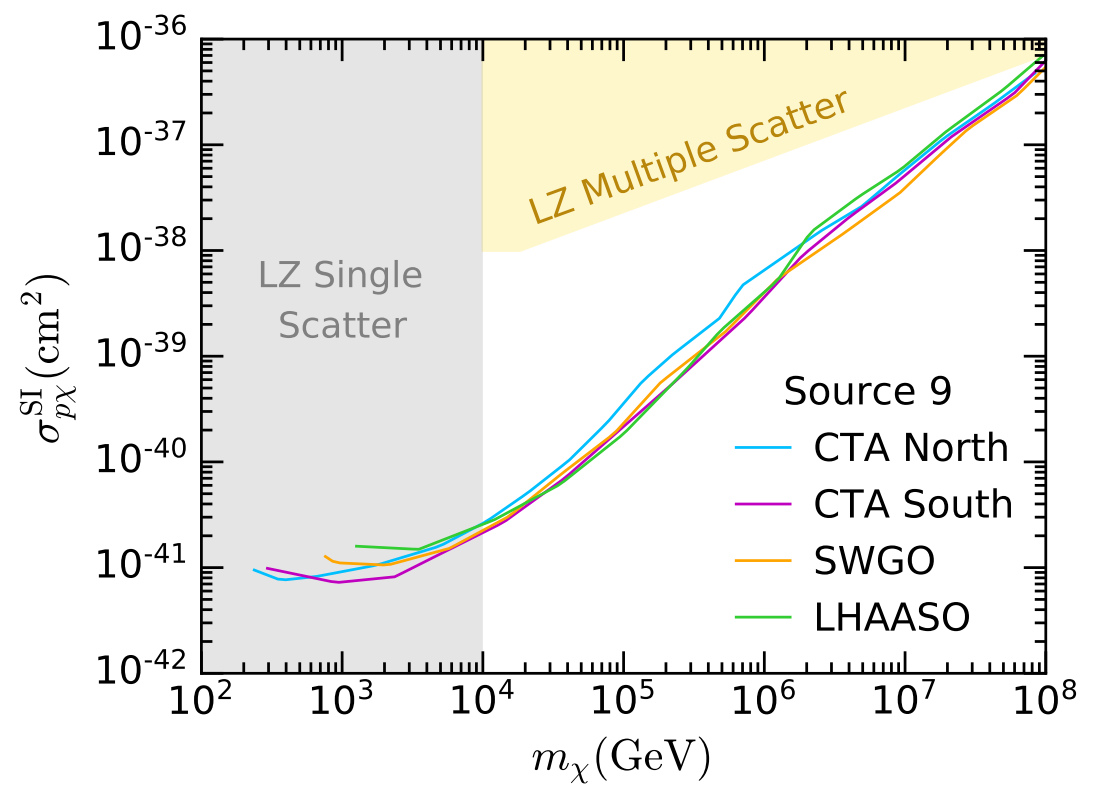
Thanks to the Gaia mission, we now know many nearby white dwarfs, dense stellar remnants with well-measured properties. With Sandra Robles and colleagues, we ask whether ten of them, all within 13 parsecs, capture dark matter that then annihilates into gamma rays. Future telescopes such as CTA, LHAASO and SWGO could probe dark matter-nucleon interactions down to about $10^{-41}$ cm$^2$ above a TeV. That is competitive with the LZ direct-detection experiment.
-
Measuring cosmic rays with neutrinos
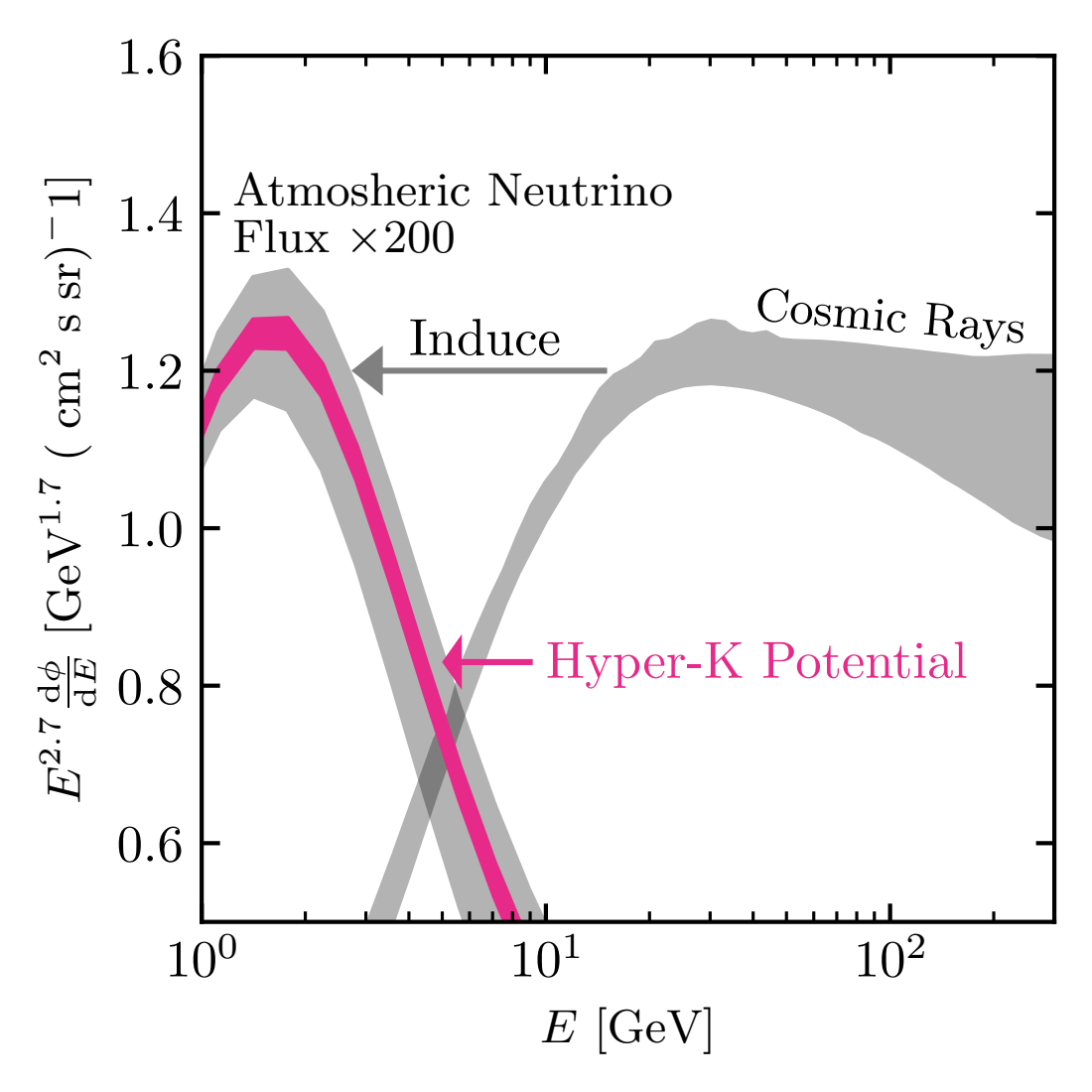
Satellites and balloons measure cosmic rays directly, but only at specific places and times, and their results do not fully agree. With Jayden Newstead and Louis Strigari, we show that detectors such as Hyper-Kamiokande can measure the cosmic rays through the atmospheric neutrinos they produce. Our technique reduces the uncertainty on the neutrino flux from about 20% to about 7%. That in turn improves Hyper-K's sensitivity to the mixing angle $\theta_{23}$ by a factor of 2.
2024
-
Jupiter as a dark matter detector
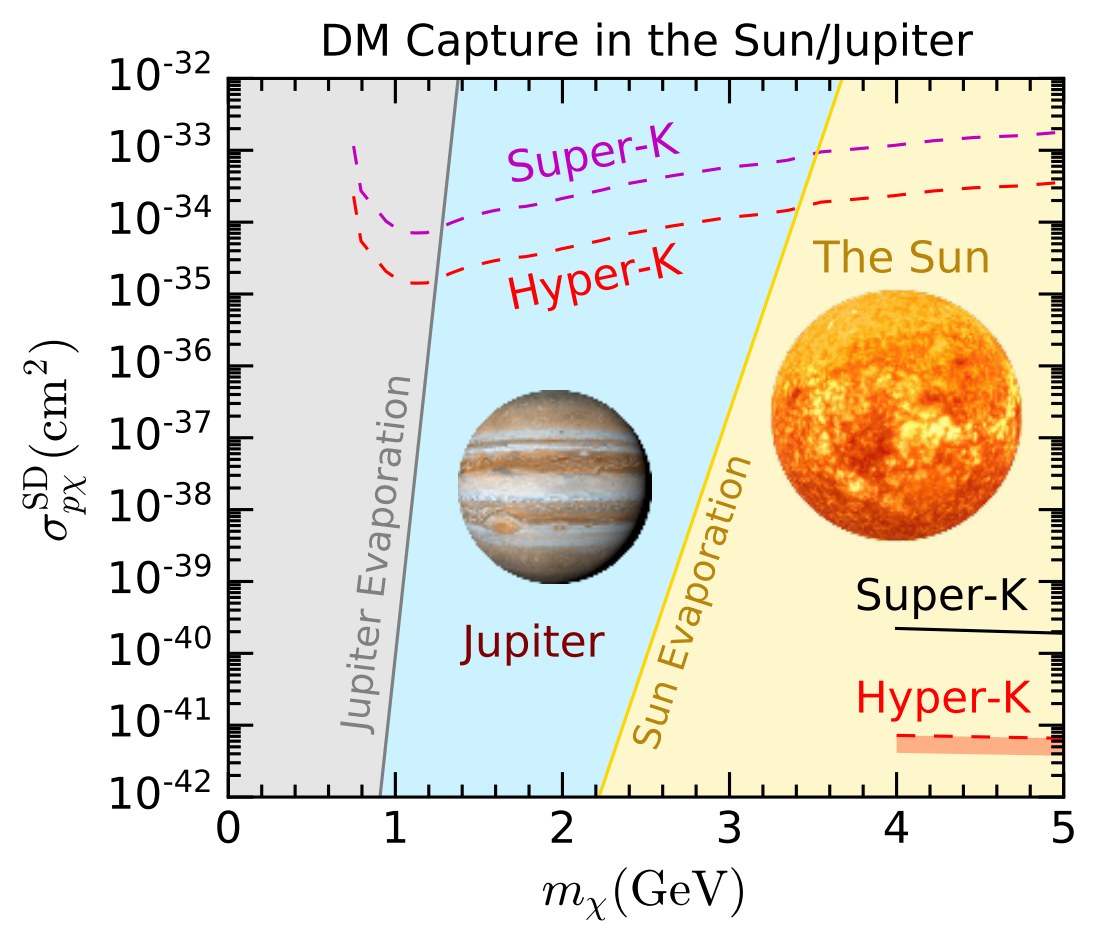
The Sun is too hot to keep light dark matter, which evaporates before it can annihilate into neutrinos. With Sandra Robles, we show that Jupiter, with its much cooler core, holds on to dark matter lighter than a few GeV. Hyper-Kamiokande could then see the resulting neutrinos and reach interaction strengths of $2\times10^{-35}$ cm$^2$ below 2 GeV. That surpasses current limits from the Sun and from direct detection in this mass range.
-
Counting every solar neutrino with DUNE
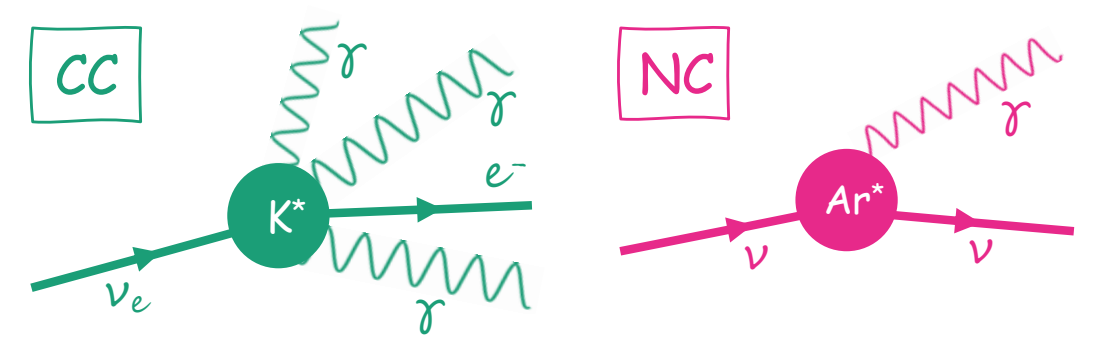
Comparing electron neutrinos with neutrinos of all flavors is how the SNO experiment proved that solar neutrinos oscillate. With Jayden Newstead, John Beacom, Nicole Bell and Matthew Dolan, we show that DUNE can measure all flavors through neutral-current interactions that excite argon nuclei. Combined with DUNE's other solar channels, this would give the most precise measurements of the solar mixing parameters using solar neutrinos. It requires dedicated, but realistic, work on DUNE's low-energy capabilities and on neutrino-argon cross sections.
2023
-
Seeing $\nu_\tau$ appear at low energies in JUNO
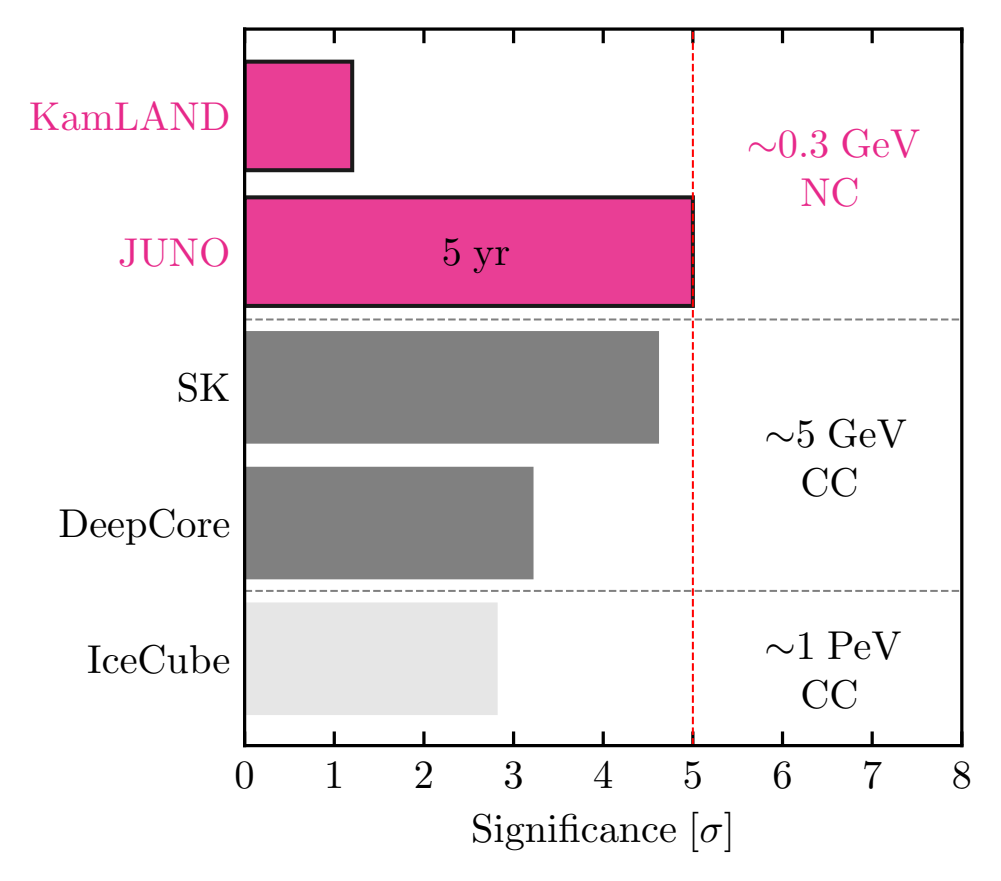
At low energies, tau neutrinos ($\nu_\tau$) from atmospheric oscillations cannot make tau leptons, so nobody has seen them appear. With John Beacom, Nicole Bell and Matthew Dolan, we propose a way to detect them in JUNO, through neutrinos of any flavor knocking neutrons out of carbon. With oscillation into $\nu_\tau$, JUNO should see 55 such events per year, instead of 41 if the muon neutrinos simply disappeared. With better laboratory cross-section data, JUNO can reach $5\sigma$ sensitivity within five years.